White sesame, black sesame: one seed, two different oils
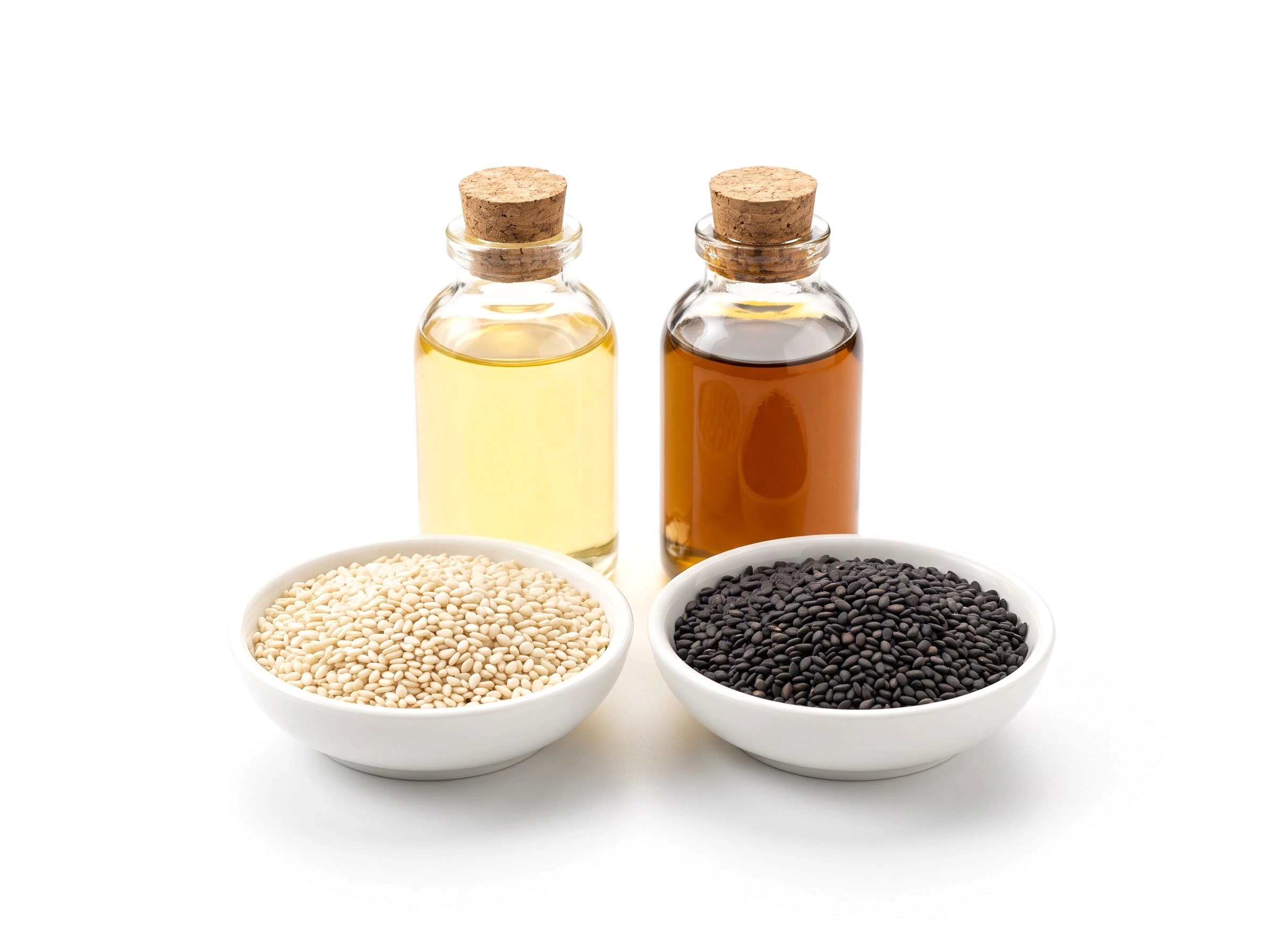
Ask most people what separates white and black sesame oil and they will say colour, and stop there. Colour is real, but it is the smallest part of what changes once the seed goes into the press.
What the husk does
White sesame has had its outer husk removed before pressing. Black sesame is pressed with the husk still on. That husk carries most of the seed’s stronger, more roasted flavour — which is why black sesame oil tastes noticeably more intense than white, even before either one is heated.
It also means the two seeds behave differently under the same cold press. Black sesame gives a smaller yield for the same weight of seed, because more of what goes in is husk rather than oil-bearing kernel. That shows up in the price, not hidden inside it.
Why we sell both instead of one
Most kitchens stock one sesame oil and use it for everything. We would rather sell both and let the dish decide: white sesame’s lighter, nuttier oil for a finishing drizzle where you do not want to fight the other flavours, black sesame’s heavier, more roasted oil for the dishes built to carry it.
Neither is the “better” sesame oil. They are two different tools pressed from close relatives of the same plant, and the label tells you which one you are holding.